Anxiety vs Stress: What’s the Difference?
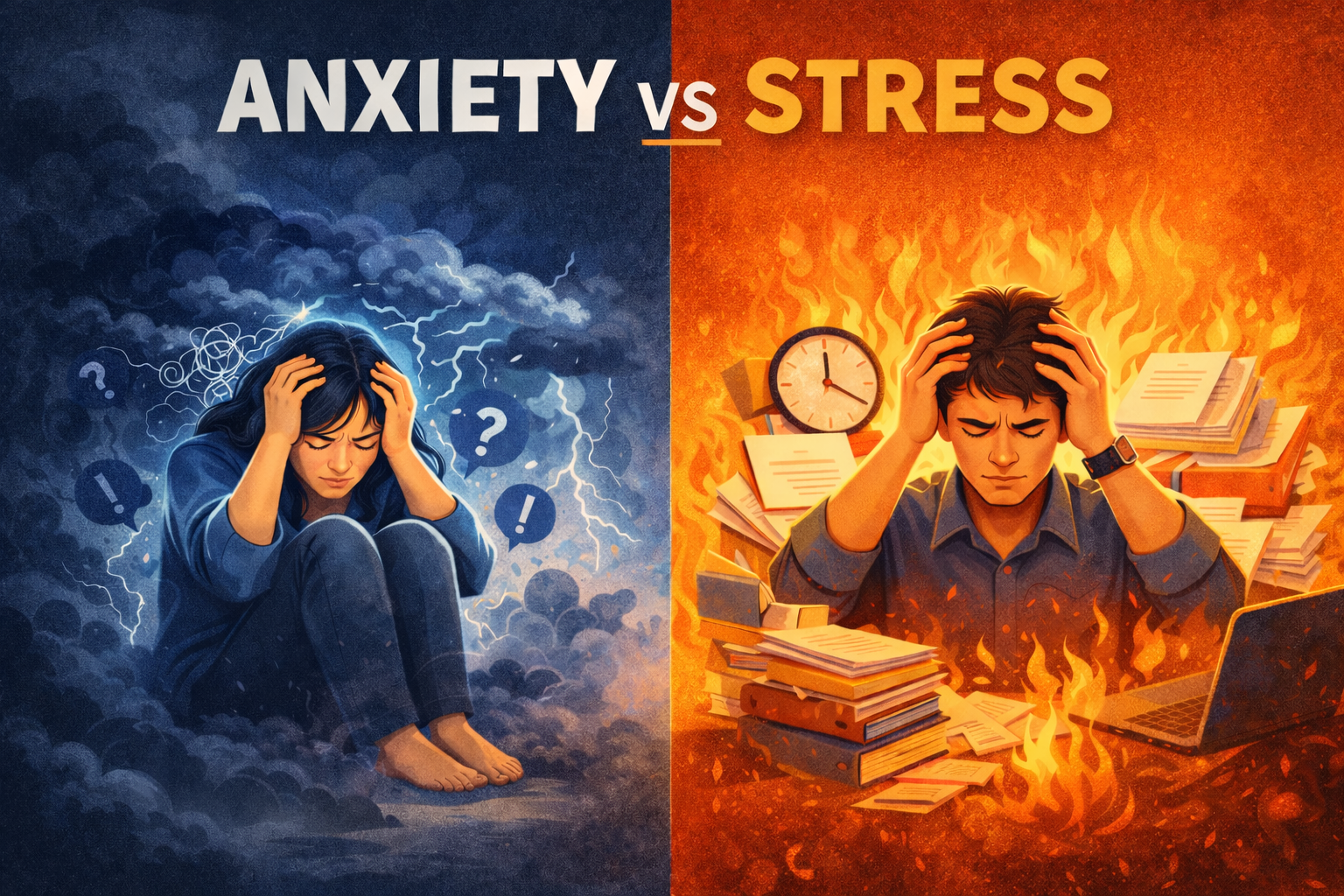
Many people who come to therapy say something like:
"I feel overwhelmed all the time. Is this stress… or is it anxiety?"
It’s a very common question. The words stress and anxiety are often used interchangeably in everyday conversation, but they are not quite the same thing. In therapy, understanding the difference can be important, because recognising what you’re experiencing is often the first step toward managing it.
Both stress and anxiety are natural responses from the mind and body. They exist to help protect us and respond to challenges. However, they usually arise from different triggers and can affect us in different ways.
If you’ve ever wondered whether what you’re feeling is stress, anxiety, or perhaps a combination of both, this article will help you explore the differences.
You can use the links below to navigate to any section of this article:
Pause and Reflect
Before we explore the differences between stress and anxiety in more detail, it can be helpful to pause and reflect on your own experience.
Take a moment to consider:
Is there something specific happening right now that feels overwhelming?
Or do you feel a general sense of worry, even when things seem relatively calm?
When the situation changes, do those feelings ease fairly quickly, or do they stick around?
Your answers can offer a clue as to whether you’re experiencing stress, anxiety, or a mixture of both.
What Is Stress?
If you reflected on the questions above, you may have noticed that your thoughts focused on a particular situation or pressure in your life. This is often how stress shows up.
Stress is the body’s natural response to demands, pressure, or challenges. When something requires our attention or effort, the body activates a response designed to help us cope. This response, often called the “fight or flight” response, increases alertness and energy so we can deal with the situation.
In short bursts, stress can actually be helpful. It can sharpen focus, motivate us to act, and help us respond to challenges. However, when pressures continue for long periods without enough time to recover, stress can begin to affect both our mental and physical wellbeing.
Common Sources Of Stress
Stress is often linked to specific pressures or demands in everyday life. Some common examples include:
Work deadlines or heavy workloads
Financial pressure or money worries
Relationship challenges or conflict
Major life changes, such as moving house, changing jobs, or becoming a parent
Family or caregiving responsibilities
Health concerns, either personal or involving a loved one
Academic pressure, such as exams or coursework
Time pressure or feeling constantly busy
In many cases, stress has a clear trigger. When the situation improves or the pressure reduces, the stress often begins to ease as well.
Stress and anxiety can also overlap in performance-based situations, such as exams, presentations, interviews, meetings, or work deadlines. If this feels familiar, you can read more in Performance Anxiety at Work or School: Why It Happens and How to Manage It
Common Signs of Stress
Stress can affect both the mind and the body. While everyone experiences it differently, some common signs include:
Feeling overwhelmed
Irritability or frustration
Headaches or muscle tension
Difficulty concentrating
Trouble sleeping
Feeling mentally exhausted
Feeling restless or unable to relax
Changes in appetite
Low motivation
Feeling constantly under pressure
Short-term stress can sometimes be helpful. It can motivate us to meet deadlines or prepare for important events. The difficulty arises when stress becomes constant or overwhelming, leaving little time for the body and mind to recover.
What Is Anxiety?
While stress is often linked to specific pressures or situations, anxiety tends to be more persistent and less connected to a clear external trigger.
Instead of responding to something happening right now, anxiety often involves a sense of ongoing worry or unease, even when there isn’t an immediate problem to solve.
If you'd like to explore anxiety in more depth, including its causes, symptoms, and treatment options, you can read my blog post: What Is Anxiety? Causes, Symptoms, and Treatment Options.
Common Signs of Anxiety
Anxiety can affect people in physical, emotional, and behavioural ways. Some common signs include:
Persistent or excessive worry
Racing or intrusive thoughts
Feeling restless or on edge
Difficulty concentrating
Trouble sleeping
Rapid heartbeat or a pounding chest
Shortness of breath
Muscle tension
Stomach discomfort or nausea
Avoiding situations that trigger worry
For some people, anxiety can also build into panic attacks, which may feel sudden, intense, and frightening. If this is something you experience, you may find my article on Understanding Panic Attacks: How to Manage Them and What Helps Long Term helpful.
Stress vs Anxiety: The Key Difference
While stress and anxiety can feel very similar, the main difference often lies in what is triggering the feeling and where the mind is focused.
A helpful way to think about it is this:
Stress is usually connected to something happening right now.
Anxiety is often focused on what might happen in the future.
A simple way to picture the difference
Stress:
“I have a lot to deal with right now.”
Anxiety:
“What if something goes wrong?”
Stress tends to arise when there is a clear pressure, demand, or situation that requires attention. For example, you might feel stressed about an upcoming deadline, a busy week at work, or an important decision that needs to be made.
In these situations, the mind is focused on managing a present challenge.
Anxiety, however, often involves the mind moving ahead to possible future outcomes, particularly negative ones. Instead of responding to a specific situation, the mind may begin asking questions such as:
What if I fail?
What if people judge me?
What if something goes wrong?
When this happens, the mind starts imagining uncertain or worst-case scenarios, even when there is no immediate threat.
This is why anxiety can sometimes feel more persistent and difficult to switch off, as the mind continues to anticipate what might happen next. In some cases, this can show up in subtle ways. You can learn more in my blog post: high-functioning anxiety and why it often goes unnoticed
Understanding this difference can help people recognise whether they are responding to a current pressure (stress) or a future-focused worry (anxiety).
Can Stress Turn Into Anxiety?
In some situations, yes.
When stress continues for a long time without relief, the body’s stress response can remain activated. Over time, this can leave the nervous system in a constant state of alertness.
When this happens, the mind may begin to anticipate problems or threats even when there is no immediate situation to deal with. This is one way that ongoing stress can gradually contribute to feelings of anxiety.
Examples of long-term stress that may increase the risk of anxiety include:
Long-term workplace pressure
Financial difficulties
Relationship conflict
Major life transitions
When the nervous system stays in a heightened state for extended periods, it can become harder for the body to fully relax. The mind may remain focused on potential worries or future problems, making it difficult to switch off or feel at ease. For many people, this is especially noticeable in the evening or at night, when there are fewer distractions and worries can feel louder. You can read more about this in Why Anxiety Feels Worse at Night.
A Quick Moment of Reflection
Now that we’ve explored the differences between stress and anxiety, it can be helpful to pause and notice how your own mind responds in everyday situations.
Imagine you send a message to someone and they don’t reply for several hours.
What is your first reaction?
Do your thoughts sound more like:
“They’re probably just busy. I’ll hear back later.”
This response is often linked to a more situational reaction, similar to stress.
Or do your thoughts begin to move toward something like:
“Did I say something wrong? Are they upset with me?”
This pattern is more typical of anxiety, where the mind starts imagining possible negative explanations or outcomes.
You may recognise elements of both responses. Many people move between stress and anxiety depending on the situation.
Simply noticing these patterns can help you better understand what you’re experiencing.
How Therapy Can Help With Stress and Anxiety
Therapy can provide a space to slow down and explore what may be contributing to ongoing stress or anxiety.
Depending on your situation, therapy may help you:
understand the patterns behind your worries
learn practical strategies to manage anxious thoughts
reduce physical tension and stress responses
build confidence in difficult situations
develop healthier ways of responding to pressure
Many people find that even a few sessions can provide useful tools and a clearer understanding of what they are experiencing.
When It Might Help to Seek Support
Stress and anxiety are common human experiences. However, support may be helpful if you notice:
Persistent or overwhelming worry
Difficulty concentrating or sleeping
Feeling constantly on edge
Avoiding certain situations because of fear
Stress or anxiety affecting work, relationships, or daily life
Therapy can help you understand the patterns behind your thoughts and develop practical ways to manage them.
Conclusion
Stress and anxiety are closely related, which is why they are often confused.
However, stress is usually linked to external pressures, while anxiety often involves ongoing worry about future possibilities. Recognising the difference can help you better understand what you’re experiencing and how to respond.
If you’d like support with stress or anxiety, you’re welcome to book a session directly, or contact me with any questions before getting started.
Or, if you’d like a clearer picture of your anxiety, you can take my free Anxiety Self Assessment—it’s quick, private, and informative.
If you’d like to learn more about anxiety and how it affects the mind and body, these articles may also be useful:
What Is High-Functioning Anxiety? Signs and Why It Often Goes Unnoticed
Understanding Panic Attacks: How to Manage Them and What Helps Long Term
Performance Anxiety at Work or School: Why It Happens and How to Manage It
I’m Amber Sexton, BSc (Hons), a counsellor and psychotherapist in private practice. I offer a safe, non-judgemental space where you can explore what you’re going through at your own pace. Everyone deserves to be heard and supported, and I believe no one should have to suffer in silence.
Hand in Hand Therapy | Face-to-face in Epsom and online across the UK and worldwide.