What Is High-Functioning Anxiety? Signs and Why It Often Goes Unnoticed
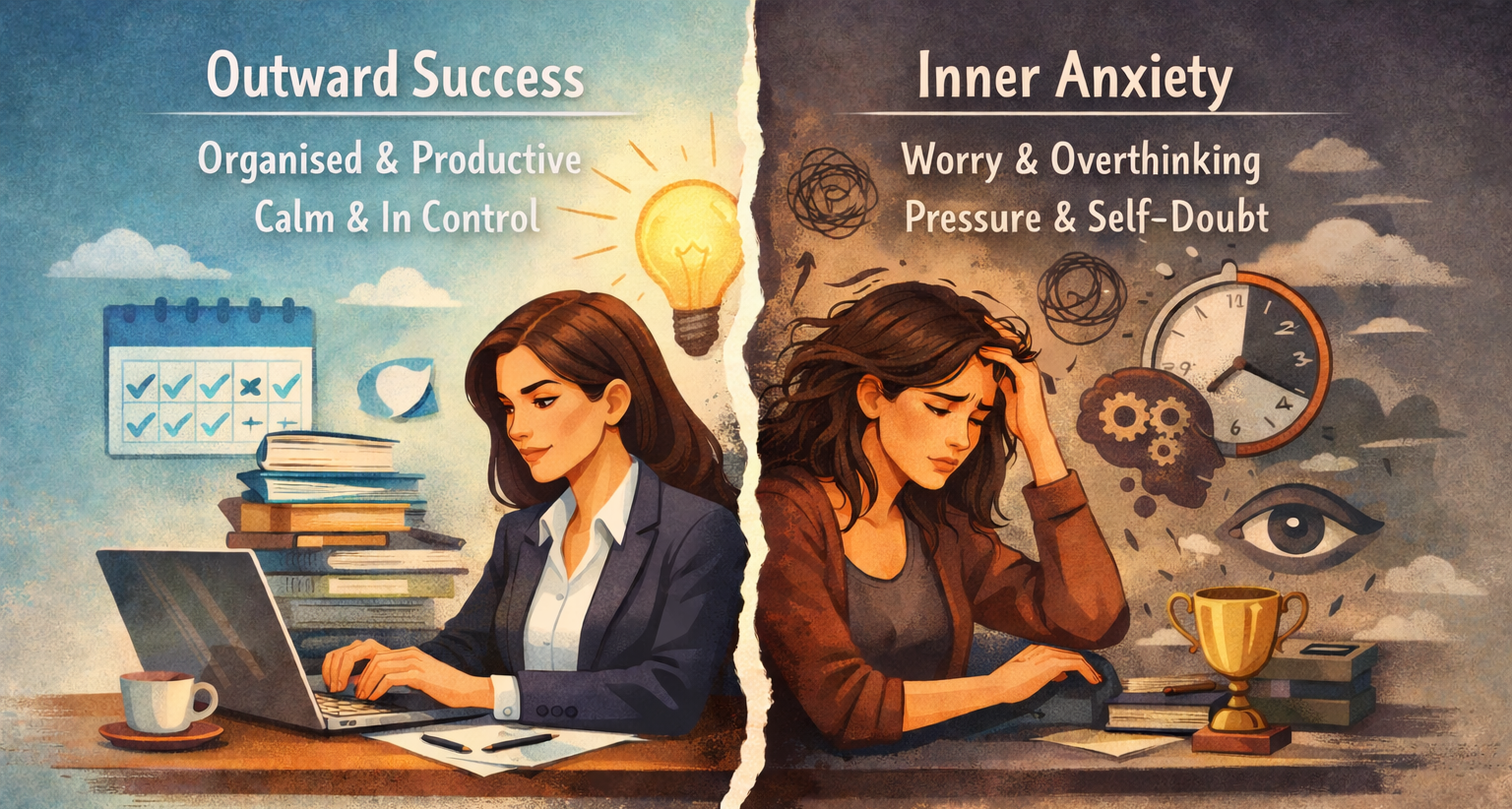
High-functioning anxiety describes people who appear successful, organised, and in control externally while experiencing ongoing anxiety internally. Although they often manage careers, relationships, and responsibilities effectively, this outward stability can exist alongside constant worry, overthinking, and pressure to perform.
Because daily functioning remains relatively intact, high-functioning anxiety can be difficult to recognise. Many behaviours associated with it—such as perfectionism, overworking, or staying constantly busy—are often mistaken for personality traits or a strong work ethic.
This confusion can make it harder to tell the difference between anxiety and everyday stress. If you’d like to explore this further, read my blog post Anxiety vs Stress: What’s the Difference?
If you’ve ever wondered whether your constant drive to stay productive, overthinking, or difficulty relaxing might be more than just personality traits, this blog post will help you understand what high-functioning anxiety is, the common signs to look for, and why it often goes unnoticed.
You can use the links below to navigate to any section of this article:
What Is High-Functioning Anxiety?
High-functioning anxiety refers to experiencing ongoing internal anxiety while continuing to manage work, responsibilities, and daily life effectively. Although the term is widely used, it is not an official clinical diagnosis.
To understand anxiety more broadly, including its causes, symptoms, and treatment options, you can read my blog What Is Anxiety?
People with high-functioning anxiety are often seen as capable, organised, and reliable. They may perform well professionally or academically, stay on top of responsibilities, and maintain a sense of control in their daily lives. Because they appear to function successfully, the anxiety they experience internally may not be obvious to others.
To others, people with high-functioning anxiety are often perceived as:
Dependable and responsible
Highly motivated or driven
Organised and detail-oriented
Successful or high-achieving
Despite this outward success, the drive to perform well may be influenced by underlying anxiety. Fear of failure, concerns about meeting expectations, and ongoing self-criticism can create strong internal pressure to keep achieving and staying productive, especially in performance-based situations such as work deadlines, meetings, exams, presentations, or academic expectations. If this feels familiar, you may find Performance Anxiety at Work or School: Why It Happens and How to Manage It helpful.
For many people, this pressure can feel exhausting, particularly when others see only the capable and productive side.
Internally, this anxiety may show up as:
Constant overthinking or replaying situations
Difficulty switching off or relaxing, even during downtime
Feeling restless or mentally “on edge”
A strong urge to stay busy or productive
Worry about making mistakes or disappointing others
This contrast between external competence and internal stress is one of the defining features of high-functioning anxiety. While someone may appear calm and in control to others, they may be managing ongoing worry and pressure beneath the surface.
Some people describe feeling as though they must always stay “on top of things,” even when they feel mentally exhausted.
Over time, sustaining this level of internal tension can contribute to emotional exhaustion, chronic stress, and burnout if it is not recognised and addressed.
Common Signs of High-Functioning Anxiety
High-functioning anxiety can appear subtle because daily responsibilities and performance remain intact. The signs below reflect patterns often associated with underlying anxiety that may not be obvious externally.
Some of the most common signs of high-functioning anxiety include:
Perfectionism
Overthinking and constant worry
Overworking
A strong need for control
Difficulty relaxing
People-pleasing tendencies
Physical symptoms of anxiety
Below are these signs explained in more detail.
1. Perfectionism
Perfectionism involves setting very high standards and feeling strong pressure to meet them. This may appear as spending excessive time refining details, feeling distressed by small mistakes, avoiding tasks unless they can be done perfectly, or linking self-worth closely to productivity and achievement.
2. Overthinking and Constant Worry
Overthinking involves repeatedly analysing conversations, decisions, or situations in an attempt to prevent mistakes or negative outcomes. People may replay past interactions, anticipate potential problems, struggle to switch off their thoughts at night, or expect worst-case scenarios.
This can often feel more noticeable in the evening or at night, when there are fewer distractions and the mind has more space to focus on worries. You can read more about this in Why Anxiety Feels Worse at Night.
3. Overworking
Overworking can involve a strong drive to stay productive and discomfort during periods of rest. This may appear as taking on more responsibilities than necessary, difficulty saying no to additional commitments, or feeling guilty when not being productive.
4. A Strong Need for Control
A need for control often develops as a way of managing uncertainty. People may rely heavily on routines, detailed planning, or predictability, and may feel uneasy when plans change or when situations feel uncertain.
5. Difficulty Relaxing
Many people with high-functioning anxiety experience ongoing mental or physical tension even during downtime. Relaxing can feel uncomfortable, and the mind may quickly return to thinking about tasks, responsibilities, or future concerns.
6. People-Pleasing Tendencies
People-pleasing may involve prioritising others’ expectations in order to avoid conflict or disappointment. This can include difficulty saying no, avoiding disagreement, or taking on responsibility for others’ feelings.
7. Physical Symptoms of Anxiety
Anxiety can also appear through physical symptoms caused by ongoing stress in the body. These may include muscle tension, headaches, fatigue, trouble sleeping, digestive discomfort, or feeling restless or on edge.
For some people, anxiety can also become more intense physically and may include panic attacks. If you experience sudden episodes of intense fear or strong physical symptoms, you may find Understanding Panic Attacks: How to Manage Them and What Helps Long Term helpful.
High-functioning anxiety does not look the same for everyone. Some individuals may recognise several of these signs, while others may notice only a few. When these patterns become persistent or begin to affect well-being, it may indicate that anxiety is playing a larger role in daily life.
A Moment for Reflection
If some of the signs above feel familiar, it may be helpful to pause and reflect on your own experiences. The questions below are not intended to diagnose anxiety, but they may help you notice patterns in how you respond to stress, expectations, and daily pressures.
You might take a moment to ask yourself:
Do I often feel pressure to stay productive, even when I am tired or would benefit from rest?
Do I find it difficult to relax without thinking about what I should be doing next?
Do I frequently replay conversations or worry about whether I made a mistake?
Do others tend to see me as calm, organised, or successful while I feel anxious internally?
Do I find it hard to slow down or take breaks without feeling guilty?
If you recognise yourself in several of these questions, it may suggest that anxiety is influencing how you experience daily life. Simply noticing these patterns can be an important first step toward understanding your relationship with stress and finding healthier ways to respond to it.
Why High-Functioning Anxiety Often Goes Unnoticed
High-functioning anxiety can be difficult to recognise because many of the behaviours associated with it are socially valued. Traits such as productivity, reliability, and striving for high standards are often seen as positive qualities, which can make the underlying anxiety less visible.
Another reason it may go unnoticed is that daily functioning often remains intact. Responsibilities continue to be managed, work may still be completed to a high standard, and relationships may appear stable. From the outside, there may be little indication that someone is experiencing significant internal stress.
Much of the experience of high-functioning anxiety also happens internally. Persistent worry, overthinking, and self-criticism are not always visible to others, which can make the anxiety harder to identify.
Over time, this level of pressure can become normalised. The constant drive to stay productive or meet high expectations may begin to feel like a normal way of functioning, even if it leaves little room to rest.
In some cases, the underlying stress only becomes more noticeable when it begins to affect well-being, relationships, or overall quality of life.
When to Seek Support
Recognising the signs of high-functioning anxiety is an important first step in understanding how anxiety may be affecting daily life.
Support may be helpful if anxiety begins to interfere with sleep, relationships, emotional well-being, or the ability to relax and switch off. Speaking with a mental health professional can provide space to explore these patterns and develop healthier ways of responding to stress.
Approaches that can help manage anxiety include:
Therapy or counselling
Stress management techniques
Mindfulness and relaxation practices
Cognitive behavioural approaches
Lifestyle changes that support mental health
Seeking support can help individuals better understand their anxiety, develop helpful coping strategies, and reduce the impact anxiety has on daily life.
Conclusion
High-functioning anxiety often hides behind productivity, success, and outward stability, even while significant pressure and worry are experienced internally. Recognising the signs can help bring greater awareness to how anxiety may be affecting daily life. With this awareness, it becomes easier to begin exploring healthier ways of managing anxiety and supporting overall well-being.
Need Support?
If you recognised some of the signs of high-functioning anxiety discussed in this article, support may help you better understand how anxiety is affecting your daily life.
You are welcome to book a session or contact me with any questions. You can also take the free Anxiety Self-Assessment for a quick, private way to gain more insight into your anxiety.
If you’d like to learn more about anxiety and how it affects the mind and body, these articles may also be useful:
Understanding Panic Attacks: How to Manage Them and What Helps Long Term
Performance Anxiety at Work or School: Why It Happens and How to Manage It
About the Author
I’m Amber Sexton, BSc (Hons), a counsellor and psychotherapist in private practice. I offer a safe, non-judgemental space where you can explore what you’re going through at your own pace. Everyone deserves to be heard and supported, and I believe no one should have to suffer in silence.
Hand in Hand Therapy | Face-to-face in Epsom and online across the UK and worldwide.