Understanding Panic Attacks: How to Manage Them and What Helps Long Term
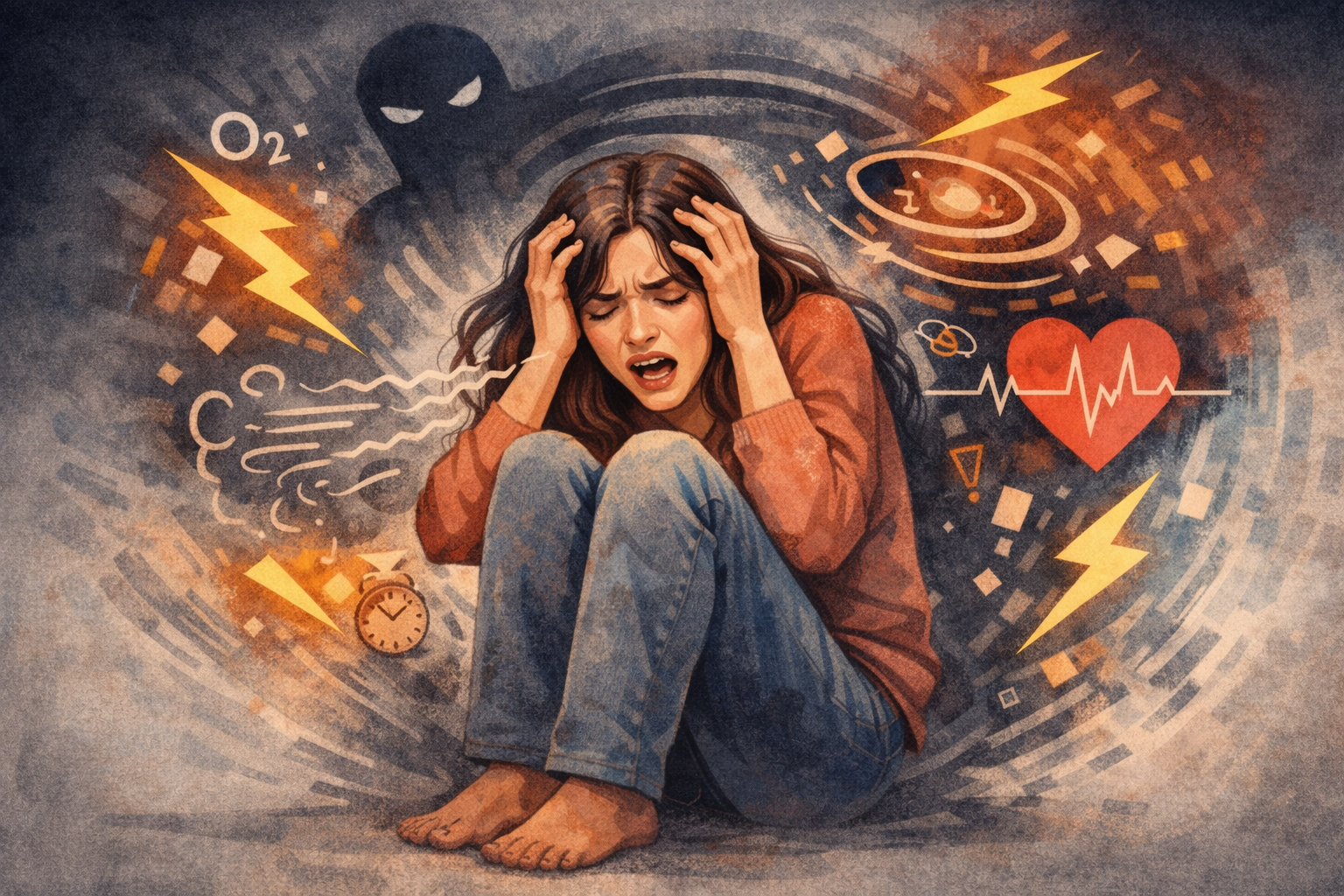
Panic attacks can feel terrifying. Many people describe them as feeling like a heart attack, a loss of control, or even a fear of dying. Many people experience panic attacks at some point, even if they’ve never struggled with anxiety before.
As a therapist, one of the most important things I want you to understand is this:
A panic attack is not dangerous—even though it feels like it is.
They often come on suddenly, sometimes without any clear trigger, which can make them even more distressing. For many people, the unpredictability fuels ongoing anxiety—“What if it happens again?”—and can lead to avoiding certain places or situations.
The key to recovery is not just learning how to stop a panic attack in the moment, but changing how you respond to it when it happens.
In this blog post, you’ll learn exactly how to stop a panic attack, why they happen, and what actually works long term.
You can use the links below to navigate to any section of this article:
What Is a Panic Attack?
A panic attack is a sudden surge of intense fear or discomfort that peaks within minutes. It activates your body’s fight-or-flight response, even when there’s no real threat.
In simple terms, your brain is mistakenly signalling danger, and your body responds as if you need to escape or protect yourself—even if you’re completely safe.
Panic attacks can feel unpredictable. They may happen:
Out of the blue (unexpected panic attacks)
In response to specific triggers (such as crowds, travel, or stress)
This unpredictability is often what makes them so distressing, as people begin to fear the next attack as much as the experience itself.
Although they can feel random, panic attacks are often linked to a heightened sensitivity to bodily sensations—such as a slight increase in heart rate or a change in breathing—which are then misinterpreted as dangerous.
Over time, this can lead to what is often called the “fear of fear” cycle:
You notice a physical sensation
You interpret it as a threat
Anxiety increases
The symptoms intensify
This cycle can make panic attacks feel more frequent and more intense, especially when they are not fully understood.
It’s also important to note that panic attacks can happen to anyone. You do not need a diagnosed anxiety disorder to experience one. However, if they become frequent or lead to avoiding certain situations, it may be a sign that additional support would be helpful.
If you’d like a broader understanding of anxiety, you can read my blog post on What Is Anxiety? Causes, Symptoms, and Treatment Options.
Common Symptoms of a Panic Attack
Symptoms are both physical and psychological, and can escalate very quickly:
Racing or pounding heart
Shortness of breath or feeling like you can’t breathe
Chest pain or tightness
Dizziness or lightheadedness
Tingling or numbness in hands or face
Sweating or chills
Feeling detached or unreal (derealisation)
Fear of losing control, going crazy, or dying
These symptoms are not harmful—but they are intense enough to feel like a medical emergency, which is why many people initially seek urgent medical help.
Because of this, many people mistake their first panic attack for a serious physical condition, such as a heart attack. While it’s always important to rule out medical causes if you’re unsure, repeated episodes with similar patterns are often linked to panic rather than a physical illness.
How Long Do Panic Attacks Last?
Most panic attacks:
Peak within 5–10 minutes
Begin to subside within 20–30 minutes
Although they feel overwhelming in the moment, panic attacks are time-limited. Your body cannot stay in a heightened state of panic indefinitely.
However, the emotional after-effects—such as exhaustion, shakiness, or lingering anxiety—can last longer, especially if the experience was particularly intense.
For some people, this can lead to ongoing worry about when the next attack might happen.
Why Panic Attacks Feel So Frightening
One of the defining features of a panic attack is how convincing the symptoms are.
Your body is producing real physical sensations:
Your heart really is beating faster
Your breathing really does feel restricted
But the danger is not real.
Panic attacks are driven by a false alarm in the nervous system—an overprotective response designed to keep you safe, even when there is no actual threat.
What makes panic attacks feel so frightening is a combination of how your body reacts and how your mind interprets those reactions.
Firstly, the intensity of the physical symptoms can mimic serious medical conditions, which naturally triggers fear. When your heart races or your breathing changes suddenly, your brain is wired to assume something is wrong.
Secondly, the experience can feel overwhelming and difficult to control. Panic often comes on quickly, leaving little time to process what is happening, which can create a sense of helplessness.
There is also a strong internal focus during a panic attack. Your attention shifts inward onto your body, which can amplify sensations and make them feel even more intense.
At the same time, your mind may start searching for an explanation:
“What’s happening to me?”
“Is something seriously wrong?”
This uncertainty adds another layer of fear.
Finally, the unfamiliarity of the experience—especially in early panic attacks—can make it feel more threatening. When something intense happens without a clear cause, the brain tends to interpret it as dangerous.
Together, these factors—intense physical sensations, loss of control, internal focus, and uncertainty—are what make panic attacks feel so frightening, even though they are not harmful.
Panic Attack vs Anxiety Attack
Although often used interchangeably, there is a difference:
Panic attacks are sudden, intense, and reach a peak quickly
Anxiety tends to build more gradually and is often linked to a specific worry or stressor
Panic attacks can sometimes occur without any clear cause, whereas anxiety is usually connected to something you’re thinking about or anticipating.
Understanding this distinction helps you recognise what you’re experiencing and respond more effectively in the moment.
If you’re unsure how anxiety differs from everyday stress, you may find it helpful to read my blog post: Anxiety vs Stress: What’s the Difference?
How to Stop a Panic Attack Immediately
These simple techniques can help you steady yourself during a panic attack and regain a sense of control. You don’t need to do all of them—start with one and keep it simple. Even a small shift in your breathing or focus can begin to calm your system.
-
Panic can make your breathing fast and shallow.
Try this:
Inhale for 4 seconds
Hold for 4 seconds
Exhale slowly for 6 seconds
Repeat for a few minutes.
-
Bring your attention back to the present moment.
Notice:
5 things you can see
4 things you can feel
3 things you can hear
2 things you can smell
1 thing you can taste
-
Gently say to yourself:
“This is a panic attack.”
“It will pass.”
Putting a clear label on the experience helps reduce uncertainty and prevents your mind from escalating the situation.
-
It’s natural to want the feeling to stop immediately, but trying to force it away can increase tension.
Instead:
Allow the sensations to be there
Notice them without reacting
Let them rise and fall naturally
Taking this approach can reduce the intensity over time.
-
If you can:
Sit down
Go somewhere quieter
Soften your focus
-
Shift your attention to something neutral:
Count backwards
Focus on an object
Repeat a calming phrase
If you find yourself dealing with panic attacks often, having the space to talk things through with a therapist can make a meaningful difference. It can help you understand what’s happening, feel more in control, and build confidence in managing these experiences over time.
What To Do After a Panic Attack
After a panic attack, it’s common to feel drained, shaky, or unsettled. Your body has been through an intense experience, so it’s natural to need some time to recover.
Support your recovery:
Drink water
Rest briefly
Take a gentle walk
Avoid caffeine immediately after
You may also find your mind going back over what just happened, especially if it felt overwhelming or unexpected. When this happens, try to gently bring your focus back to the present, rather than analysing it straight away.
Giving yourself a bit of space and care in these moments can help your system settle more fully. Allow your body time to return to a more settled state, without putting pressure on yourself to feel completely back to normal straight away.
Long-Term Ways To Prevent Panic Attacks
Stopping a panic attack in the moment is important, but long-term progress often comes from reducing your sensitivity to panic and changing how you respond to it over time.
This usually involves building a different relationship with the experience—where panic feels less overwhelming and more manageable when it arises. As this shift develops, many people notice that the intensity and frequency of panic begins to reduce.
There are a number of ways this can be supported, including the approaches below.
1. Therapy
Therapy can help you understand your experiences more clearly and develop ways of responding that feel more manageable.
Different approaches can be helpful, including:
Cognitive Behavioural Therapy (CBT): focuses on identifying and challenging unhelpful thought patterns and breaking the panic cycle
Exposure-based approaches: gently support you in facing feared sensations or situations, helping reduce avoidance over time
Person-centred therapy: offers a space to explore your experiences at your own pace, building self-understanding and confidence
Integrative therapy: combines different approaches depending on your needs
Over time, therapy can help reduce the fear around panic itself, which is often what keeps it going. It can also provide a consistent space to explore patterns, build confidence, and feel more supported in the process.
2. Gradual Exposure
Avoiding situations linked to panic can unintentionally reinforce fear, even though it may feel helpful in the short term.
Gradual, supported exposure allows you to approach these situations at a pace that feels manageable. Over time, this helps your nervous system learn that these experiences are not as threatening as they may feel.
With repetition, the intensity of the response often reduces, and situations that once felt overwhelming can begin to feel more manageable.
3. Identify and Reduce Triggers
Some factors can make panic more likely or more intense, including:
Caffeine
Poor sleep
Ongoing stress
You may also notice more personal patterns, such as certain environments, routines, or times of day.
Sometimes anxiety can be less obvious and show up in more subtle ways. You can learn more about this in my blog post What Is High-Functioning Anxiety? Signs and Why It Often Goes Unnoticed
Becoming more aware of these patterns can help you respond earlier and make small adjustments where possible. Even minor changes can have a noticeable impact over time.
4. Build a Daily Regulation Routine
Consistent habits can support your nervous system and make it easier to manage anxiety over time.
This might include:
Regular movement or exercise
Breathing or relaxation practices
Mindfulness or quiet time during the day
The aim isn’t to add pressure or create a perfect routine, but to introduce small, supportive habits that help your body feel more settled overall.
These don’t need to be time-consuming—simple, consistent practices can make a meaningful difference over time.
When To Seek Professional Help
Consider seeking support if:
Panic attacks are frequent
You avoid situations due to fear
Your daily life is affected
You find yourself worrying about when the next attack might happen
You feel on edge or hyper-aware of your body
Therapy can offer a space to explore what’s happening in a way that feels supportive and manageable. Rather than just coping in the moment, it can help you understand your experiences, reduce the fear around panic, and feel more confident in responding to it over time.
If panic attacks are starting to feel overwhelming or unpredictable, having that space to talk things through can make a meaningful difference. You don’t have to manage this on your own.
If you’d like support, you’re welcome to book a session with me. We can work together at your pace to help you feel more steady, understood, and in control.
Conclusion
Panic attacks can feel overwhelming and difficult to understand, especially when they happen unexpectedly. What often makes the biggest difference is not trying to get rid of them completely, but learning how to respond to them in a way that feels more steady and manageable.
With the right support and understanding, it’s possible to:
Respond to panic more calmly
Reduce the fear around it
Feel more confident in yourself when it happens
Over time, this can lead to a noticeable shift in how panic affects you. The aim isn’t immediate perfection, but gradual change—building a sense of control and trust in your ability to navigate these experiences.
Need Support?
If you recognised some of the experiences of panic attacks discussed in this article, support may help you better understand what’s happening and how it’s affecting you.
You’re welcome to book a session or contact me with any questions. You can also take the free Anxiety Self-Assessment for a quick, private way to gain more insight into your anxiety.
If you’d like to learn more about anxiety and related experiences, you may find these articles useful:
About the Author
I’m Amber Sexton, BSc (Hons), a counsellor and psychotherapist in private practice. I offer a safe, non-judgemental space where you can explore what you’re going through at your own pace. Everyone deserves to be heard and supported, and I believe no one should have to suffer in silence.
Hand in Hand Therapy | Face-to-face in Epsom and online across the UK and worldwide.