Why Anxiety Feels Worse at Night
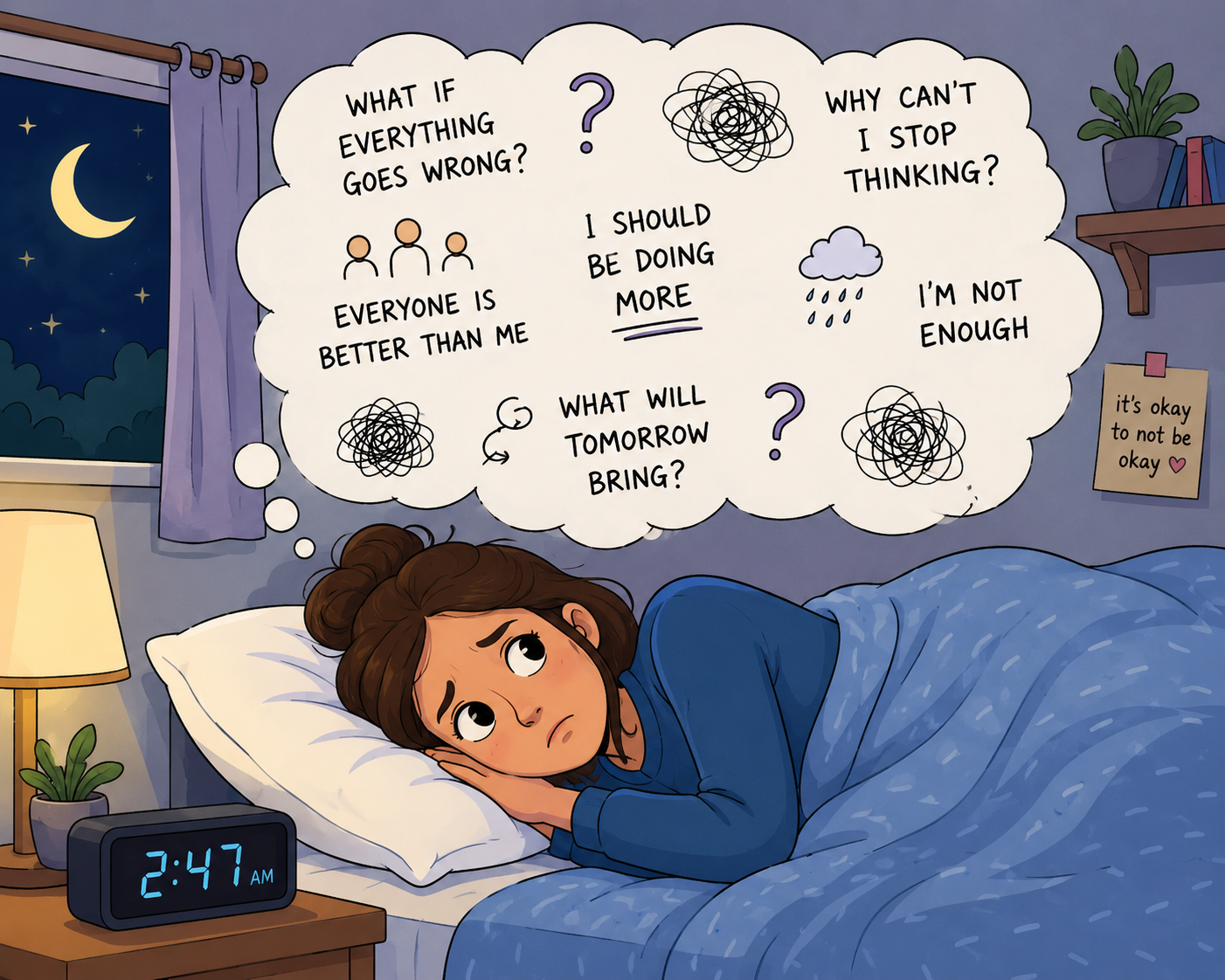
Many people notice their anxiety becomes more intense in the evening. Once the day slows down, racing thoughts, physical tension, overthinking, and difficulty sleeping can feel much harder to manage. If you have ever felt exhausted but unable to switch your mind off at night, you are not alone.
If you would like to better understand anxiety itself, including common symptoms, causes, and treatment approaches, you may find my blog post on What Is Anxiety? Causes, Symptoms, and Treatment Options helpful.
This blog explores why nighttime anxiety happens and what may help.
You can use the links below to navigate to any section of this article:
Reasons Why Anxiety Feels Worse at Night
There are several reasons why anxiety can feel worse at night. As the day comes to an end, anxious thoughts, physical tension, and overthinking can often feel more noticeable. Here are some of the reasons this can happen.
1. Tiredness Can Make Anxiety Feel More Intense
By the end of the day, both the mind and body are often running on low energy. When we are exhausted, it becomes harder to manage stress, regulate emotions, and think clearly.
Worries that felt manageable earlier can seem far more overwhelming at night because fatigue lowers our ability to cope. A tired mind is also more likely to focus on negative thoughts, making anxiety feel louder and more difficult to switch off.
Poor sleep can then strengthen this cycle further, leaving us feeling more emotionally sensitive, tense, and overwhelmed the next day.
Many people also struggle to tell the difference between ongoing anxiety and everyday stress. My blog post Anxiety vs Stress: What’s the Difference? explains how the two can affect the mind and body differently.
2. The Body Stays in ‘Fight or Flight’ Mode
Anxiety is not only experienced in the mind. It also affects the nervous system and the body.
When we feel anxious, the body can move into a stress response often known as “fight or flight.” This is the body’s natural way of trying to protect us from perceived danger, even when there is no immediate threat present.
This can cause physical symptoms such as:
a racing heart
shallow breathing
muscle tension
restlessness
nausea or stomach discomfort
feeling on edge
For some people, these physical symptoms can feel similar to a panic attack, especially at night when the body feels overstimulated. You can learn more from my blog post Understanding Panic Attacks: How to Manage Them and What Helps Long Term.
At night, these sensations can feel much more noticeable because there are fewer distractions competing for our attention. In the quiet of the evening, the mind and body often become more aware of physical discomfort, anxious thoughts, or internal tension.
3. Overthinking Often Appears at Bedtime
For many people, bedtime is the first quiet moment they have had all day. Without the usual distractions, the mind can quickly become busy with unanswered questions, worries, or unfinished thoughts.
Thoughts may begin to focus on:
work pressures
relationships
health worries
finances
social situations
uncertainty about the future
This constant mental activity is something many people with What Is High-Functioning Anxiety? Signs and Why It Often Goes Unnoticed. experience, particularly when external distractions become quieter at night.
Late at night, it is easy to fall into repetitive thinking patterns that feel difficult to switch off. The mind may search for certainty, reassurance, or solutions, even when no immediate action can be taken.
Instead of bringing clarity, this mental overload often leaves people feeling more emotionally drained and less able to settle into rest.
4. Loneliness and Isolation Can Increase Anxiety
Evenings can sometimes feel emotionally heavier, especially for people who are feeling disconnected, unsupported, or emotionally overwhelmed. When the day becomes quieter, difficult feelings that were easier to avoid earlier may begin to surface more strongly.
Without regular interaction, distraction, or a sense of comfort around us, the mind can become more focused on feelings of emptiness, vulnerability, or emotional unease.
This is a very human response. Emotional wellbeing is closely connected to feeling safe, connected, and supported, which is why nighttime can feel particularly difficult for some people.
5. Screen Time Can Overstimulate the Nervous System
Many people scroll on their phone or watch television late into the evening to try to relax. While this can sometimes feel comforting in the moment, constant stimulation before bed can make it harder for the nervous system to properly slow down and settle.
Social media, upsetting news, work emails, or emotionally intense content can keep the brain mentally alert at a time when it naturally needs to begin winding down. Even switching between different apps, videos, or conversations can keep the mind active and overstimulated.
The light from screens may also interfere with the body’s natural sleep-wake cycle by affecting melatonin production, which can make it more difficult to feel sleepy or fully relaxed.
For some people, late-night scrolling can also increase comparison, self-criticism, or emotional overwhelm, particularly when already feeling anxious or emotionally vulnerable.
Creating small boundaries around screen use in the evening can help support better rest and allow the mind and body more opportunity to unwind before sleep.
What Can Help With Nighttime Anxiety?
Although nighttime anxiety can feel overwhelming, there are ways to support your mind and body before bed. Here are some gentle strategies that many people have found helpful when managing anxiety in the evening.
1. Create a Gentle Evening Routine
Simple routines can help signal safety and consistency to the nervous system. This may include:
dimming lights
reducing screen time
having a warm drink
reading
listening to calming music
taking a warm shower
2. Try Breathing Exercises
Slow breathing exercises can help reduce physical tension and support relaxation before sleep. Anxiety often changes breathing patterns, making breaths shorter and faster, which can increase feelings of panic or restlessness.
Gentle breathing techniques may help the body settle more naturally at bedtime.
Slow breathing can help calm the body’s stress response and reduce physical symptoms of anxiety.
One simple exercise is extended exhale breathing:
inhale slowly for 4 seconds
exhale slowly for 6 seconds
repeat for a few minutes
Longer exhales can help activate the body’s relaxation response and encourage a greater sense of calm
3. Avoid Trying to ‘Force’ Sleep
Many people become anxious about not sleeping, which can create even more pressure at bedtime. Instead of forcing sleep, it can help to focus on rest.
Gentle acceptance, calming activities, and reducing pressure around sleep can often be more effective than repeatedly checking the clock or worrying about how tired you may feel tomorrow.
Some people also find it helpful to use simple grounding techniques, such as counting slowly, focusing on breathing, or even counting sheep. These gentle distractions can sometimes help shift attention away from anxious thoughts and create a greater sense of calm before sleep.
4. Write Down Worries Earlier in the Evening
Some people find it helpful to journal or write down worries before bed. Putting thoughts onto paper can create a sense of mental release and reduce the feeling of carrying everything internally into the night.
Writing things down can also help organise thoughts that may otherwise feel overwhelming or repetitive. Rather than allowing worries to continue circling in the mind, journalling can create a small sense of distance and clarity. This can be particularly helpful for people experiencing anxiety linked to work, studying, deadlines, or pressure to perform. My blog post Performance Anxiety at Work or School: Why It Happens and How to Manage It explores this in more detail.
You do not need to solve every problem immediately. Often, simply acknowledging thoughts and emotions is enough to reduce some of the mental pressure surrounding them.
For example, some people may write:
“I am worried about tomorrow’s meeting, but I do not need to solve it tonight.”
“I feel overwhelmed right now, and that is okay.”
“These thoughts feel intense because I am tired.”
“I can come back to this tomorrow with a clearer mind.”
Some people also find it helpful to end by writing down a few reassuring reminders, small priorities for tomorrow, or things they are grateful for. This can gently shift the mind away from stress and towards a calmer emotional state before sleep.
When to Seek Support
Occasional anxiety at night is very common, especially during periods of stress, uncertainty, or emotional overwhelm. However, if anxiety is regularly affecting your sleep, relationships, work, or overall wellbeing, it may help to seek additional support.
You do not have to wait until things feel unbearable before reaching out. Many people benefit from talking to a counsellor when anxiety begins to feel emotionally exhausting, difficult to manage alone, or starts impacting daily life.
Therapy can provide a safe and supportive space to explore underlying worries, understand anxiety patterns, and develop coping strategies that feel realistic and manageable for you.
Conclusion
Nighttime anxiety can feel isolating and overwhelming, particularly when the world becomes quieter and there is more space for worries, emotions, or physical tension to surface. However, these experiences are far more common than many people realise.
Small changes in routine, self-care, and emotional support can make a meaningful difference over time. Learning to respond to anxiety with greater understanding, patience, and self-compassion can help create a stronger sense of calm and safety at night.
If anxiety continues to feel difficult to manage, support is available, and you do not have to cope with it alone.
Need Support?
If you recognised some of the signs of performance anxiety in this article, it may be helpful to explore how it’s affecting you in more depth.
You don’t have to manage this on your own. Support can help you understand what’s driving the anxiety, build confidence, and feel more steady in high-pressure situations.
You’re welcome to book a session or contact me with any questions. You can also take the free Anxiety Self-Assessment for a quick, private way to gain more insight into your anxiety.
If you’d like to learn more about anxiety and how it affects the mind and body, these articles may also be useful:
What Is High-Functioning Anxiety? Signs and Why It Often Goes Unnoticed.
Understanding Panic Attacks: How to Manage Them and What Helps Long Term.
Performance Anxiety at Work or School: Why It Happens and How to Manage It
About the Author
I’m Amber Sexton, BSc (Hons), a counsellor and psychotherapist in private practice. I offer a safe, non-judgemental space where you can explore what you’re going through at your own pace. Everyone deserves to be heard and supported, and I believe no one should have to suffer in silence.
Hand in Hand Therapy | Face-to-face in Epsom and online across the UK and worldwide.